Every Toy a Kid Could Want: The Wish Book

by Kristine Schmucker, HCHM Curator

If you were a kid in the 1970s and 80s, you may remember the anticipation you felt when the JCPenney’s Big Book Catalog or the Sears Wish Book Catalog arrived in the mail in mid-August.


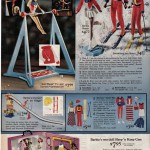
These catalogs were filled with anything a kid could want.  Hours were spent studying the pages of toys, clothes and gadgets. Page corners were turned down; items were circled in red to make sure parents or grandparents knew which items to order.

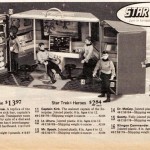
 

Sears started the tradition in 1933 with a Christmas Book catalog.  The covers featured Christmas scenes and the inside pages were filled with items to order for gifts.  The first catalog in 1933 was 87 pages with 25 pages devoted to toys and 62 page with gifts for adults. By 1968 the 605 page catalog was officially names “The Wish Book” and had 225 pages with toys and 380 for adults.

images[5]

J.C. Penney’s first Christmas catalog came out in 1963.  The 1980 J.C. Penney Catalog had every toy a kid could ever want as the below YouTube video illustrates. (click play to view, approximately 3 minutes)

Of course, shopping in the actual store was also fun!
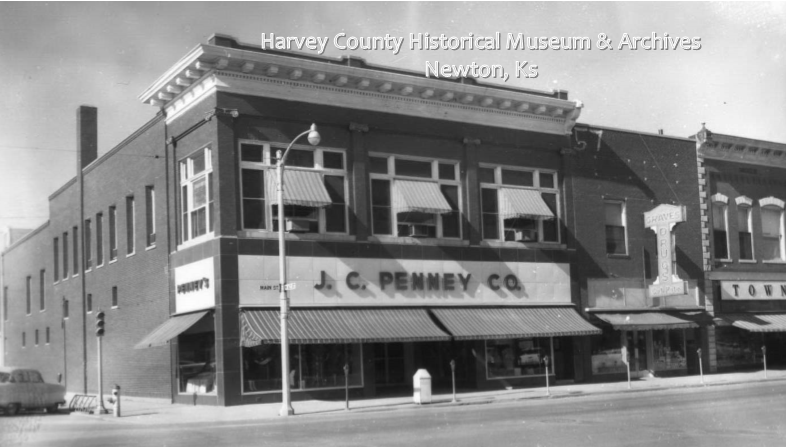
J.C. Penneys, 601 Main, Newton, 1957.

J.C. Penneys, 601 Main, Newton, 1957. HCHCM Photo Archives

Change came in the late 1990s with the growing popularity of on-line shopping. Although catalog sales for J.C. Penney’s peaked at 4 billion in 1999, five years later 40% of catalog users were placing orders using the internet. Penney’s discontinued the Big Book in 2009.

Sears also was affected by the growing popularity of on-line shopping. The Sears Wish Book was discontinued in 1993. Five years later Sears launched Wishbook.com to attract internet shoppers.  In 2009, Sears improved the site with an interactive, online Holiday Wish Book complete with Christmas music, real-life holiday scenes and other  features.

What was your favorite way to shop? How has it changed?

Sources

  • Halkias, Maria. “J.C. Penney is Turing Last Page on its Big Book” Dallas Morning News 18 November 2009/26 November 2010 at www.dallasnews.com.
  • “The Sears Christmas Wish Book, A Holiday Tradition” at www.searsarchives.com/catalogs/history_wishbook.
  • HCHM Photo Archives

“Anyone Can Apply It”

by Kristine Schmucker, HCHM Curator

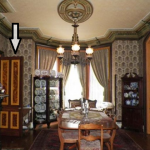
Spend time in some of the older homes in Harvey County and you might run across some interesting woodwork.

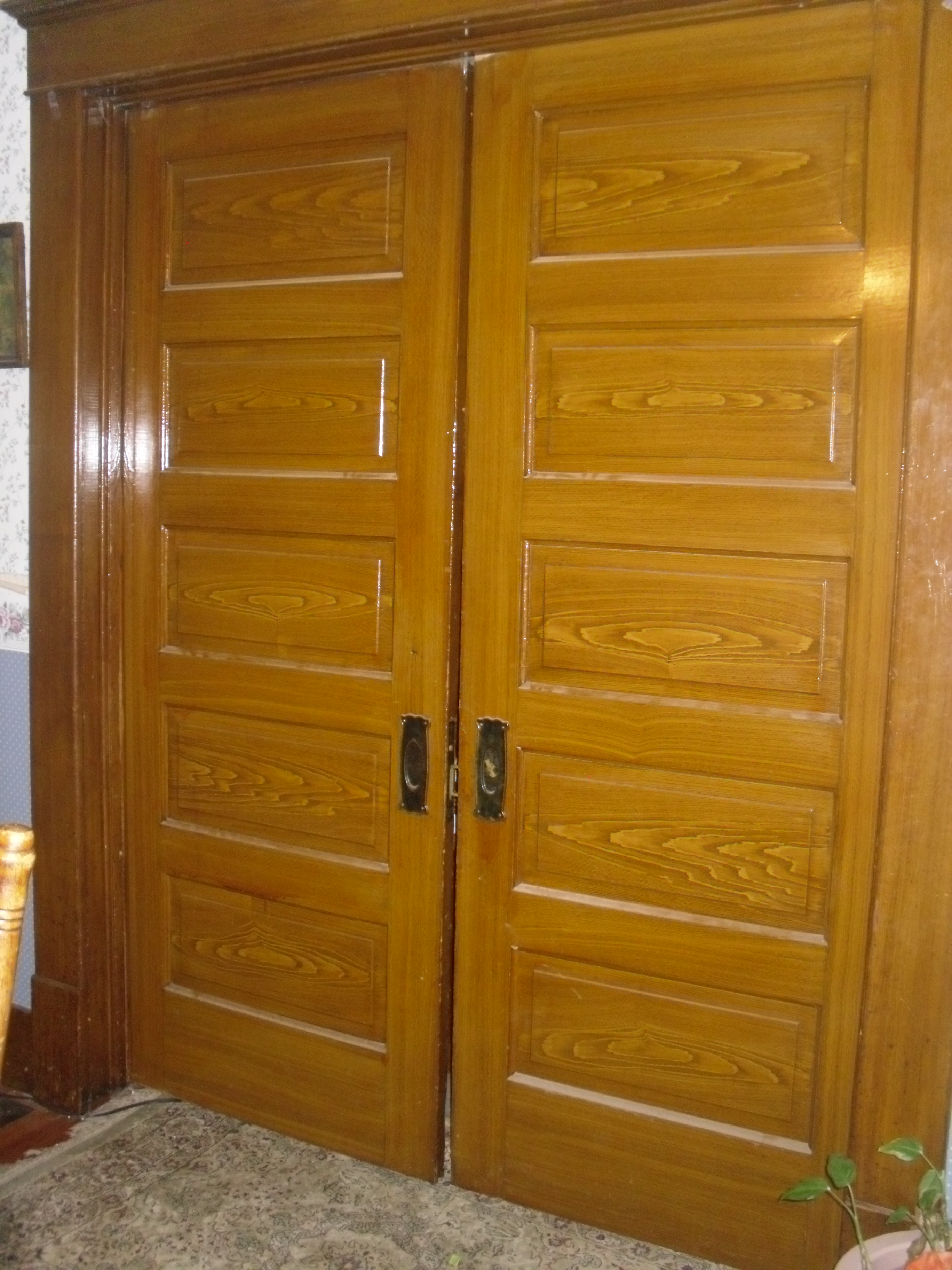
Pocket doors with false graining.

Pocket doors with false graining.

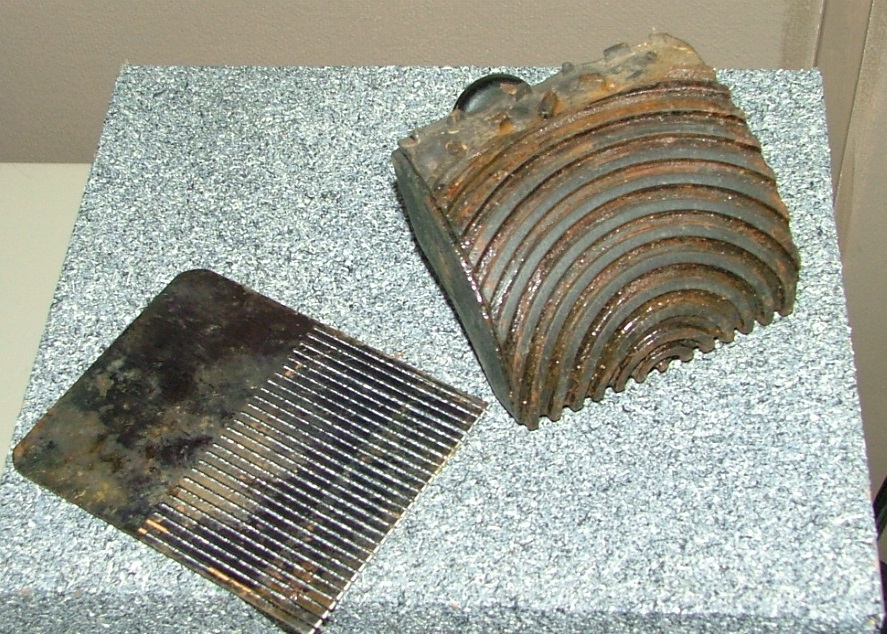
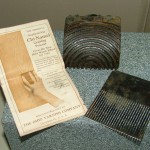
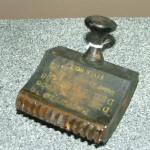
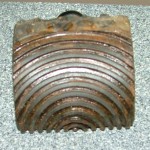
These doors reflect a popular way to decorate your home during the late 1800s into the early 1900s known as “graining” or “false graining.”  The effect was achieved with tools similar to a graining kit we have at the museum.

DSCF0503

Graining Set. HCHM #91.21

The practice of graining became popular in the United States because it was a way to make inexpensive wood, like pine, look like more expensive, less available  wood like oak, mahogany and cherry.

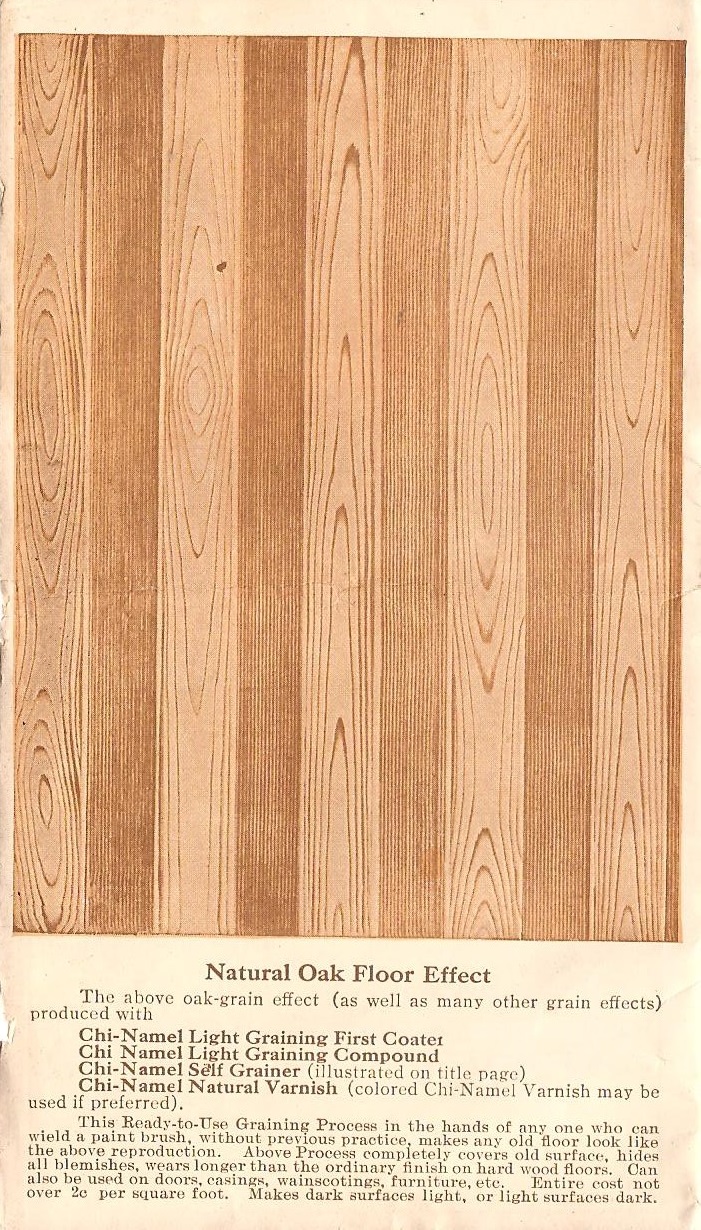
Our graining kit was patented in 1908 by the Ohio Varnish Company, Cleveland, OH as the “Original Ready-to-Use Chi-Namel Graining Process.” For “a little under 2 cents per square foot” a plain floor could become a “Hard Wood Floor with Maple Inlaid Border”  or have the effect of a natural oak floor. instructions 001 The front page of the instruction booklet explains, “Any one can apply it – previous experience not necessary.” The kit in our collection was no doubt ordered by someone interested in completing their own project, not a professional grainer.  There were people, however, that were skilled in the art and available for hire in south central Kansas.

Newton experienced a building boom in the early to mid-1880s.  Many of the homes along West Broadway and East First were built during this period. The 1885 Newton City Directory has nineteen individuals that identified “Painting” as their occupation and one woman, Mrs. F.M. Hurlbut, who worked with “Decorative Art Material.”  There is a separate category in the directory for construction. Those painters that had skill in graining would usually be paid more.

At least two area men were known for their graining skills.

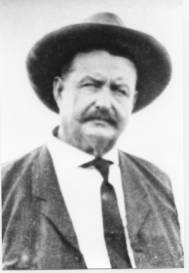
Emil Kym (1862-1918) lived in rural Harvey County near the Alta Mill community.  He was  well known for his work which included wood-graining, marbleizing and even full scale murals of the Swiss mountains.

Emil Kym (1862-1918)

Emil Kym (1862-1918)

The second was John L. Caveny, father of J. Franklin Caveny.  John L, along with wife, Louisa, and two children came to Kansas from Pennsylvania in the early 1870s.  About the same time, his parents, James and Susan, and brother, H. Wayne Caveny, also moved to Newton, Ks.  H. Wayne Caveny also worked as a contract painter.

The Reese House, built in 1879 by John Reese, has several examples of false grained doors.

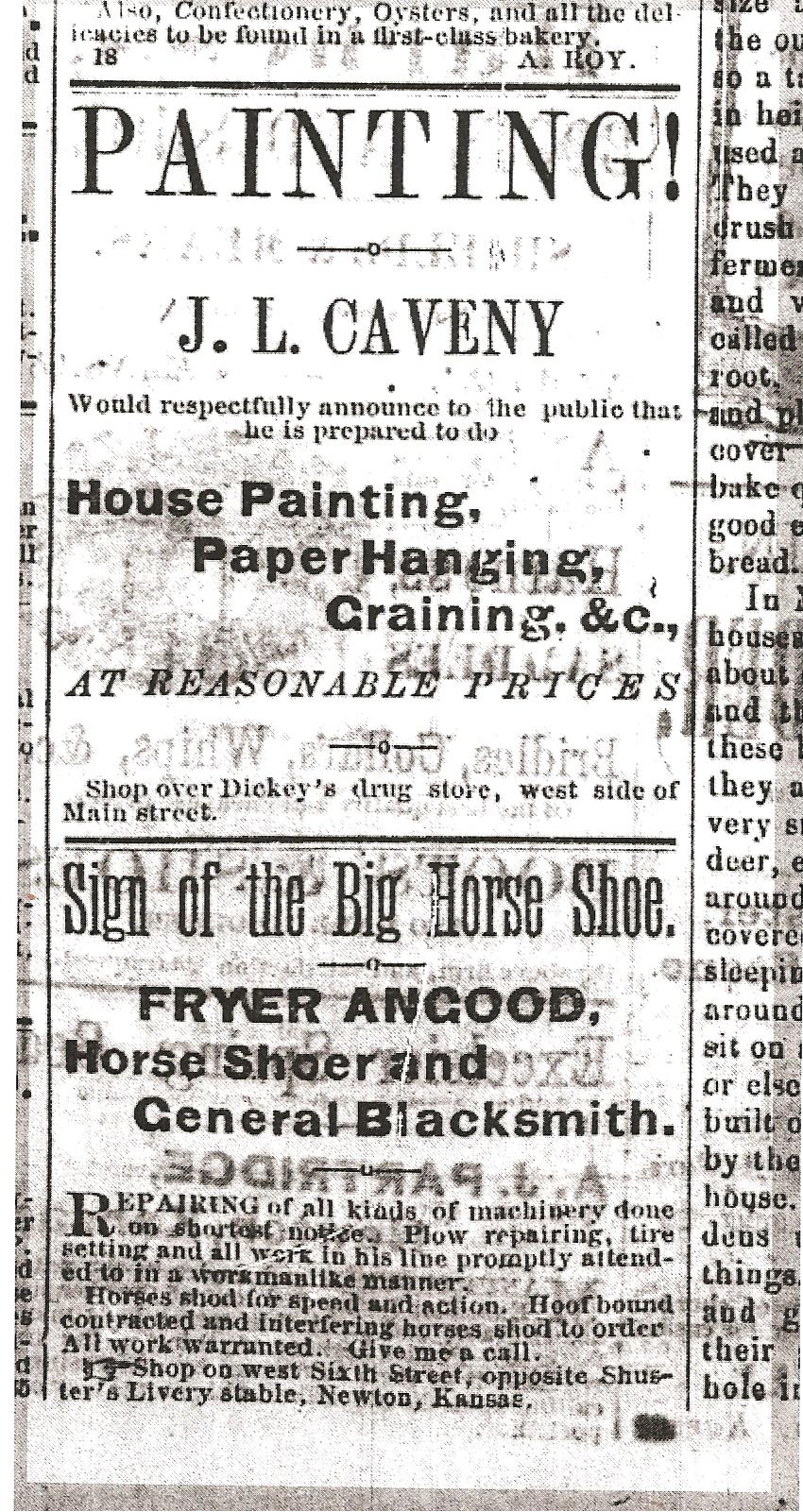
At this time, we do not know who created the wonderful interior doors at the Reese House. We do know that John L. Caveny was working in the area as early as 1876. He and his brother may have worked on the home.

Ad from The Kansan, 1 June 1876.

Ad from The Kansan, 1 June 1876.

The Caveny brothers continued to work as a painters in Harvey County.  John L. Caveny died in 1920 at the age of 80. Described as “a very useful and valued citizen of Newton,” J. LCaveny also served as county clerk for several terms.

False graining enjoyed renewed popularity in the 1970s with a renewed interest in preserving historic structures.

Find out more about the process at these  two do-it-yourself sites.

  • http://www.oldhouseonline.com/create-faux-wood-grain-finish/
  • http://www.homedepot.com/hdus/en_US/DTCCOM/HomePage/Commerce/Building_Supplies/Paint_Sealers_Supplies/Interior_Paint/Docs/MS-LowRes-5-26-final-Eng.pdf

Sources:

  • “Honored Citizen For Many Years Passed on This Morning” Evening Kansan Republican, 4 October 1920.
  • Newton City Directories: 1885, 1887, 1902, 1905, 1911, 1913, 1917. HCHM Archives.
  • U.S. Census 1880, 1900.
  • Stucky, Brian.  “Who Was Emil Kym? 13 August 2008 at  http://www.usd411.org/vnews/display.v/SEC/Facilities%7CEmil%20Kym%20Art%20Gallery%3E%3EWho%20Was%20Emil%20Kym%3F
  • http://www.oldhousejournal.com/magazine/2004/aug/art.shtml

The Many Talents of J. Franklin Caveny

By Kristine Schmucker, HCHM Curator

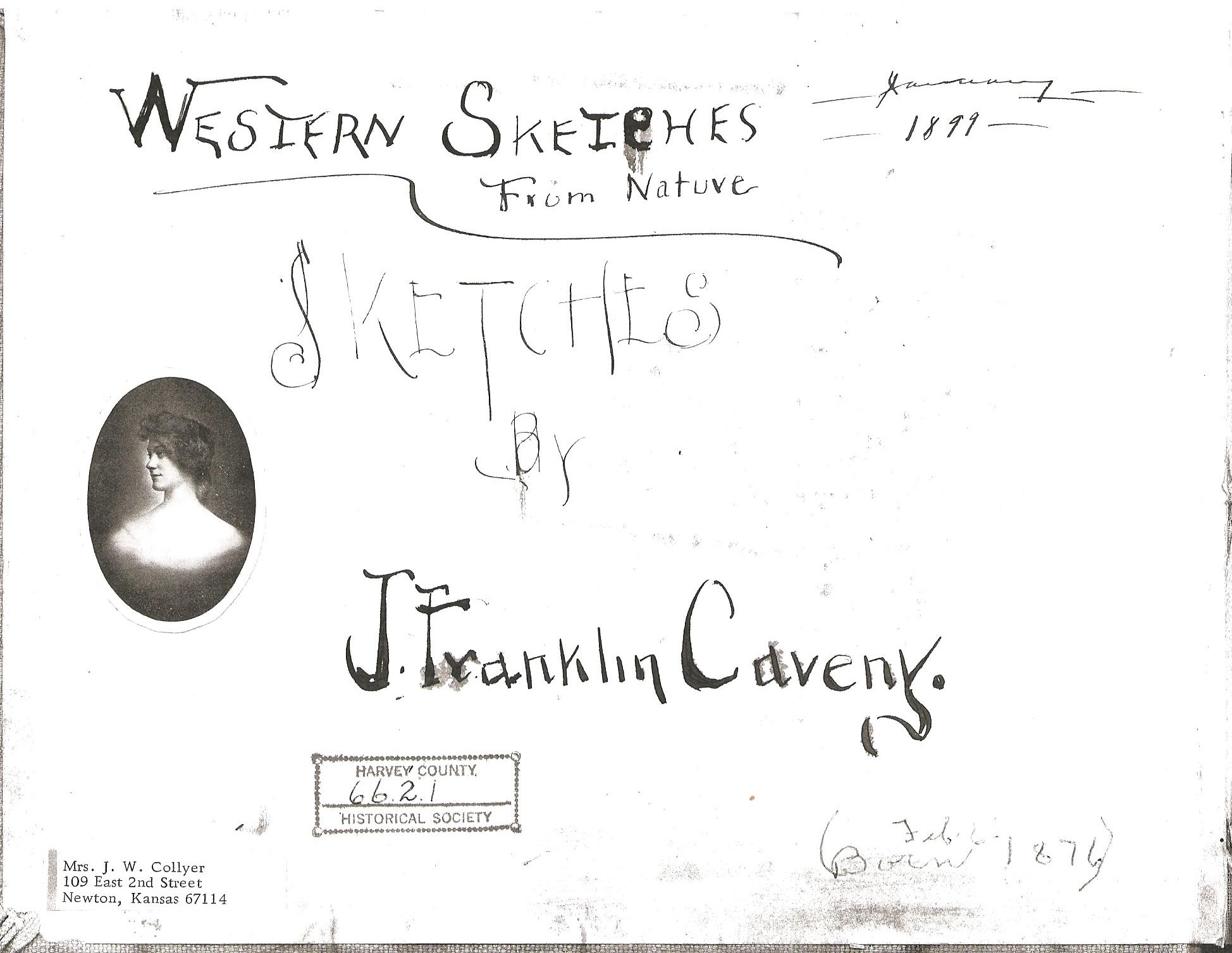
When I first started working at HCHM, I ran across a sketchbook that had been donated to the museum in 1966.

J. Franklin Caveny Sketchbook, January 1899.

J. Franklin Caveny Sketchbook, January 1899.

At the time I had no idea who J.Franklin Caveny was, but I enjoyed the sketches in the small book. The sketchbook was one of my picks for our current exhibit, “Stuff We Love,” and by now I have learned more about  J. Franklin Caveny, a man of many talents.

The chalk-talker, J. Franklin Caveny, is the humorist of the company. . . . He drew with both hands landscapes of real artistic merit while he talked, and with a few deft strokes would transform the scene from ‘Sunrise on the Atlantic” to “Moonlight on the Hudson.”

Nationally, J. Franklin Caveny  was known for his “Chalk-talks” and entertaining lectures.  He traveled the country with his wife, Maude Wood, presenting programs and demonstrations from 1906-1944.

Poet, Fred Emerson Brooks wrote of Caveny in the Post-Reader:

“Caveny is a witty and artistic genius.

He makes birds fly;

He makes chalk fly;

He makes his tongue fly;

And his fingers fly;

And as the people laugh and wonder at those different flies,

They are amazed to see how time flies.

So take J. Franklin Caveny

If artist you would have any.”

This well-known, talented entertainer got his start in Harvey County and attended Newton schools.

His obituary 1944 stated;

While [he] grew up in Newton, he began his career as a public  entertainer early in life and traveled in every state and some foreign countries.”

J. Franklin was born February 16, 1876 to John Lewis and Louise Caveny in Newton, Ks.  His father, John Lewis Caveny , was an early Harvey County settler that painted houses and hung paper.  He also offered “Graining at reasonable prices.” 

Ad from The Kansan, 1 June 1876.

Ad from The Kansan, 1 June 1876.

J. Franklin attended the South Side School, Newton (later McKinley School) in the 1880s.

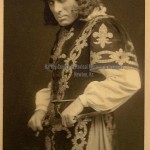
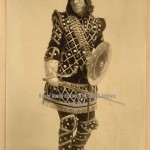
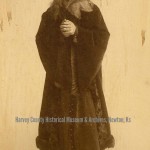
By 1906, he had played a lead role in several of Shakespeare’s plays.

He married Maud Wood in 1909 and they traveled the country performing.  Caveny maintained connections with his home community, giving artwork to friends and family.  He also returned

“to the old home town every few years, at which time he would appear at meetings of clubs, societies and churches, donating programs of entertainment, and never failing to draw large audiences.”

"To Mrs. Gaston Boyd, With sincere regards, J. Franklin Caveny, 1914

“To Mrs. Gaston Boyd, With sincere regards, J. Franklin Caveny, 1914

Composer, Richard Wagner, was a favorite subject of Caveny’s prints. In the above print, Dreams of Wagner,” Caveny used scenes from Wagner’s operas – Meistersinger, Parifal, Lohengrin, Flying Dutchman, Tristin – to create not only the background, but also the image of Wagner. One person observed that it looks like Rhinemaidens swimming up his front shirt. The distinct silhouette above Wagner’s hat could be Siegfried forging his sword.***

Another print entitled the “Haunted Wagner” uses the female form to create the image of Wagner.

Caveny was only six years old when Wagner died, so one can only wonder at his interest in this famous composer.

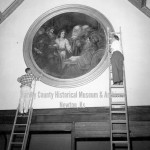
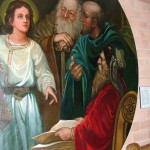
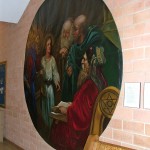
In 1914, J. D. Nicholson commissioned Caveny to paint a large mural for the First Presbyterian Church, located at 7th and Main, Newton, entitled “The Christ Child Among the Doctors.”

The mural was removed when the church was razed in 1964 and installed in the new church located at 900 Columbus Ave., Newton.

J. Franklin Caveny died at Staten Island, NY after a brief illness while on tour. His ashes were buried in the Caveny family plot in Greenwood Cemetery, Newton, Ks.

Sources

  • Evening Kansan Republican, 11 November 1902.
  • Evening Kansan Republican, 24 February  1944 – J. Franklin Caveny Obituary.
  • HCHM Photo Archives.
  • Koppes, Linda.  “Pulpits and Potlucks: A Photographic History of the Churches of Harvey County from 1872-2007.” History of the First Presbyterian Church.  HCHM Archives.
  • ***Info from Sam Jack, Newton Public Library 2024.

To see more Stuff We Love picks, visit the museum.  Admission is free (donations accepted) and we are open Tues-Fri 10-4 and the 1st & 3rd Saturday of each month from 10-4.